
Why Every Parent Should Care About Child-Resistant Packaging
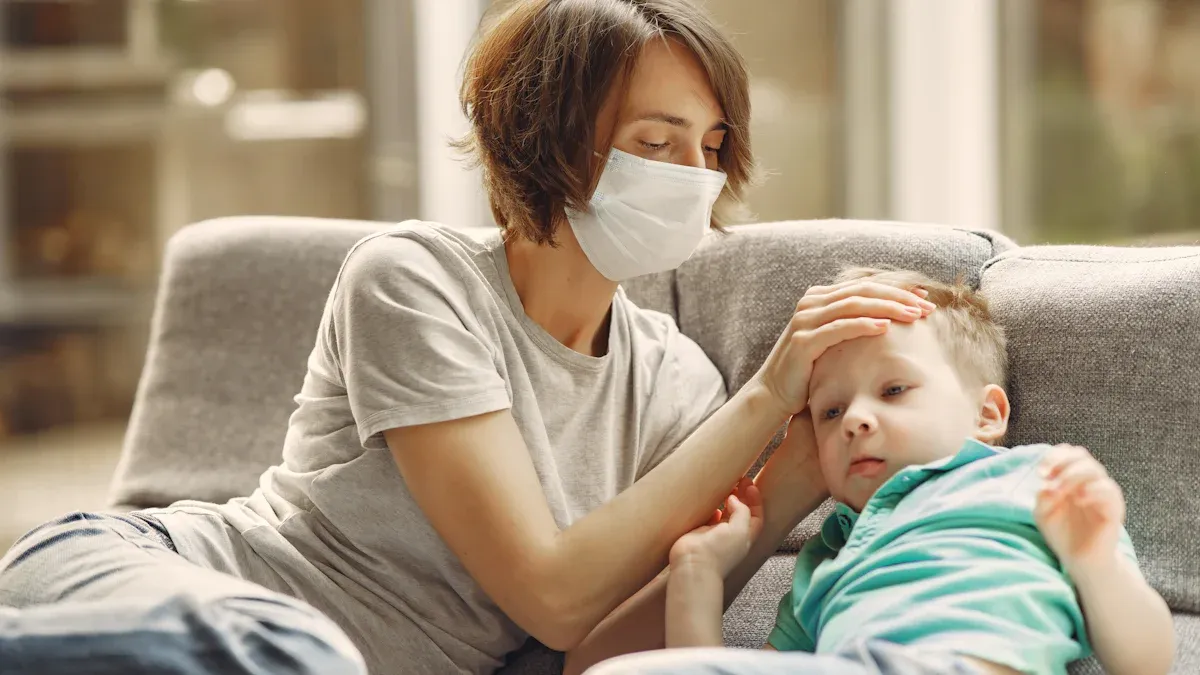
Imagine your child walking around the house. They find a bottle of medicine. This happens more than you may think. Every year, over 500,000 kids under five may get poisoned by medicine at home. The table below shows how serious this problem is:
| Statistic | Value |
|---|---|
| Medications as a cause of child poisoning deaths | Went up from 36% to 64% |
| Children under five facing possible poisoning from medications | Over 500,000 each year |
| Children treated in emergency rooms for accidental ingestions | More than 60,000 each year |
| More kids seen for medicine poisonings than car injuries | True |
| One out of every 150 two-year-olds seen for medicine poisoning | True |
| Drop in poisoning death rate from 1979 to 2006 | From 0.35 to 0.17 per 100,000 |
| Rise in medicine-related deaths among child poisonings | From 36% to 64% |
You want your child to be safe. Child-Resistant Packaging helps stop these accidents. Think about where you keep medicines and household items at home.
Key Takeaways
- Child-resistant packaging helps stop kids from getting poisoned by accident. It is hard for children under five to open these packages. This keeps them away from dangerous things.
- When you shop, pick items with child-resistant packaging. Doing this can help protect your family from harmful things.
- Always put medicines and dangerous products where kids cannot reach them. Use safe storage and child-resistant packaging together for the best safety.
- No packaging is totally child-proof. Always watch your kids and use more than one safety step to stop accidents.
- Learn about safety rules. Pick products that follow child safety standards to keep your children as safe as possible.
What Is Child-Resistant Packaging
Definition and Purpose
You might ask what makes a package child-resistant. Safety experts and government groups set clear rules for this.
A package is made to be very hard for kids under five to open or get a dangerous amount of what is inside. Adults should still be able to use it without trouble.
These rules are written in the Code of Federal Regulations (CFR16.1700.20). The rules say which things need child-resistant packaging and how testing works for different ages. The main goal is to keep young kids safe from getting poisoned by accident.
There is no package that is totally child-proof. So you should not think packaging is your first way to keep kids safe. Instead, think of packaging, even child-resistant packaging, as your last way to protect kids.
Child-resistant packaging is controlled by the Poison Prevention Packaging Act (PPPA). This law tries to keep kids under five safe from accidental poisoning and death.
How It Protects Children
You see many kinds of child-resistant packaging in stores. Each type uses a special way to make it tough for young kids to open. Adults can still open these packages easily. Here are some common ways:
| Mechanism | Description | Effectiveness |
|---|---|---|
| Push-and-turn closures | You have to push down and turn at the same time. | Less than 15% of kids aged 42-51 months can open it in 10 minutes. |
| Squeeze-and-turn designs | You must squeeze the sides before turning. | More than 90% of adults can open it in tests. |
| Blister packs | These use strong foil or peelable covers with steps to open. | Kids get into these over 80% less than regular packages. |
| Lift-and-turn tabs | You need to lift and turn to open. | N/A |
| Continuous thread caps | Safety sleeves must line up just right to open. | N/A |
These features help stop kids from getting to dangerous things. More than 50,000 kids go to the emergency room each year because they swallowed medicine by accident. You can lower this risk by picking products with child-resistant packaging.
Products That Use It
You find child-resistant packaging on lots of things at home. Here are some examples:
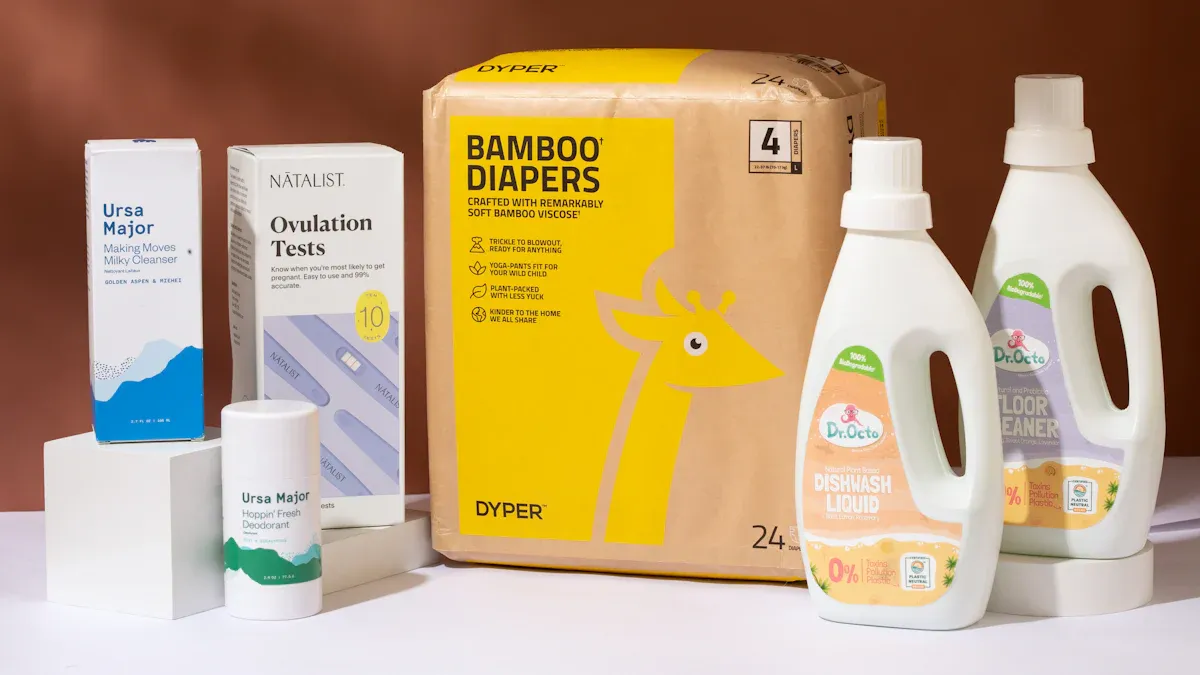
- Medications (prescription and over-the-counter pills)
- Cleaning products (like bleach and other cleaners)
- Laundry pods
- E-cigarettes and vaping products
- Pesticides and insecticides
- Baby oils
- Sunscreens
- Nail enamel dryers
- Hair oils
- Bath, body, and massage oils
- Makeup removers
- Automotive chemicals
- Furniture polish
You should always look for child-resistant packaging when you buy these items. This easy step helps keep your family safe from accidents.
Why Child-Resistant Packaging Matters
Preventing Accidental Poisoning
You want your child to be safe. Child-resistant packaging helps stop poisonings at home. These packages make it hard for young kids to open dangerous things. This includes medicine and cleaning supplies. Studies show these packages save lives. They also prevent many emergencies.
Look at the table below. It shows how child-resistant packaging changes poisoning and death numbers:
| Evidence Description | Impact |
|---|---|
| Reduction in child mortality rates from accidental poisonings since 2010 | 45% |
| Prevention of access attempts by children under 5 years old | Up to 95% |
| Reduction in medication-related emergencies among children | 40% |
| Reduction in accidental poisoning cases in India | 35% |
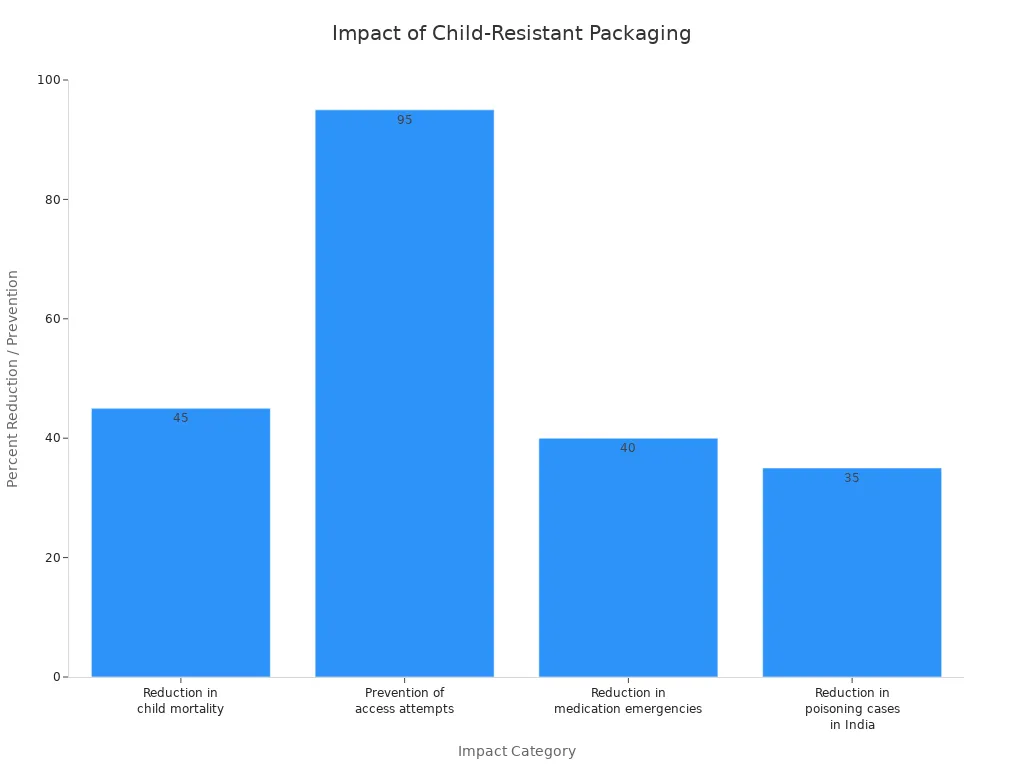
Child-resistant packaging led to fewer child deaths. There was a 45% drop in deaths from poisonings. Almost 95% of kids under five cannot open these packages. This means fewer emergency room visits. You can feel more at ease.
Here is another table. It shows the drop in child deaths and why rules matter:
| Evidence Type | Description |
|---|---|
| Child Mortality Rate | Decreased by about 1.40 deaths per million children under 5 years, which is around 24 fewer deaths each year. |
| Reduction Percentage | About 45% fewer child deaths from swallowing prescription drugs because of special packaging. |
| Compliance Issues | Over half of drug-related poisonings happened when child-resistant packaging rules were not followed. |
Note: Even the best packaging cannot protect your child if you do not use it right. Always close packages tightly. Keep them out of reach.
Regulatory Standards
You may wonder who makes the rules for child-resistant packaging. In the United States, the Poison Prevention Packaging Act and 16 CFR 1700 set these rules. These laws say which products need special packaging. They also say how companies must test them. Other countries have their own rules. The goal is always to keep kids safe.
Here is a table with some main standards from around the world:
| Standard / Regulation | Region / Scope | What It Covers | What It Means for Your Packaging |
|---|---|---|---|
| PPPA | United States | Lists medicines and dangerous products that need child-resistant packaging | If your product is on the PPPA list, every pack size and type needs a child-resistant solution |
| 16 CFR 1700 | United States | Test methods and rules for child-resistant packs | Your package must pass tests with kids and adults; design details like torque, tabs, and locks must match the rules |
| ISO 8317 | Global | Reclosable child-resistant packaging | Good for export or selling in many countries using bottles, jars, or boxes that can be closed again |
| EN 14375 | European Union | Non-reclosable child-resistant packaging for medicines | Blister packs, sachets, and other one-time packages must be tested and proven child-resistant |
| EN 862 | European Union | Non-reclosable child-resistant packaging for non-medicine products | Used for household chemicals and some goods in the EU market |
Countries with strong rules and good healthcare have fewer deaths from poisoning. Places with weak rules have more risk. You can help by picking products that meet these standards.
Panel Testing Process
You might ask how companies know their packaging works. They use panel testing. Groups of kids and adults try to open the packages in a safe setting. The results show if the packaging is safe for families.
Here is how testing works:
| Test Type | Criteria for Success | Effectiveness Requirement |
|---|---|---|
| Child-Resistant Packaging | Kids should not open the package; it fails if more than 8 units are opened. | Over 90% effectiveness |
| Unit-Dose Packaging | Kids must not open more than the toxic amount. | Over 80% effectiveness |
| Adult Testing | Adults must open the package in one minute. | Over 90% effectiveness |
- The test uses 1-4 groups of 50 kids aged 42-51 months.
- Each group has different ages.
- Kids get 5 minutes to try to open the package. If they cannot, someone shows them how, and they try again.
- Effectiveness must be over 85% without a demonstration and over 80% with a demonstration.
The child-resistant effectiveness must be over 85% without a demonstration and over 80% with a demonstration. For unit packaging, effectiveness must be over 80% when 200 kids are tested.
Manufacturers also test adults. This makes sure you can open the package easily. Quality checks help keep every batch safe.
Child-resistant packaging saves lives. When you choose products with these features, you protect your child. You help lower the risk of accidental poisoning at home.
Innovations in Child-Resistant Packaging
New Designs
Today, there are many new types of child-resistant packaging. These new designs help keep your family safe. They make it harder for kids to open dangerous things. Some of the newest features are:
- Non-reclosable packages keep things fresh and safe.
- Ziplock bags need adult skills to open.
- Blister packs need careful finger moves.
- Twist-off caps have measuring cups and safer materials.
- Multi-step openings need two actions to unlock.
- Oversized containers slow down how fast you can open them.
- Smart packaging uses technology to sense when it is touched.
- Visual tricks make it hard for kids to see how to open.
All these changes follow strict safety rules. They help stop children from getting into things they should not touch.
Usability for Adults
You want packaging that keeps kids out but lets adults in. New designs make it easier for adults, even seniors or people with disabilities. Some helpful features are:
- Ergonomic shapes fit your hand and help you grip.
- Easy-to-open containers help people with less strength.
- Clear instructions are printed on the package.
- Blister packs have peel-push designs adults can use.
- Push-and-turn or squeeze-and-turn caps need less force.
These features help you use the product safely. They also help you avoid spills or mistakes.
Tip: Always read the instructions on new packages. This helps you open them quickly and safely.
Eco-Friendly Options
You care about the planet and your family. Many companies now use eco-friendly materials in child-resistant packaging. These choices protect kids and help the environment. Some examples are:
- Recycled plastics and paperboard, sometimes up to 85% recycled.
- Biodegradable plastics made from plants.
- Recyclable paperboard blister packs like Ecoslide-RX® and Push-Pak®.
- Metal tins that are strong and do not have toxins.
- Reusable glass jars and pouches made from recycled stuff.
| Benefit | Description |
|---|---|
| Reduction of Carbon Footprint | Eco-friendly packaging lowers carbon emissions by avoiding fossil-based materials. |
| Decrease in Landfill Waste | Sustainable packaging keeps waste out of landfills. |
| Less Ocean Pollution | Using non-plastic materials helps reduce ocean pollution. |
Eco-friendly packaging works as well as regular types. It also helps make the world cleaner for your children.
Practical Tips and Limitations
Choosing Safe Products
You want your family to stay safe. Look for packages with strong safety rules. The table below helps you know what to check when shopping:
| Criteria | Description |
|---|---|
| Testing Methods | Packaging should stop most young kids from opening it, but adults should open it easily. |
| Age Consideration | Packages must be tough for kids under five to open. |
| Time Requirement | Adults should use the package quickly and correctly. |
Check for safety labels when you buy things. Make sure you can open the package, but a child cannot. Safe packaging keeps dangerous amounts away from kids.
Limitations of Packaging
No package is fully child-proof. You need to know these limits. Some studies show testing can have problems. The table below lists common issues:
| Type of Limitation | Description |
|---|---|
| Measurement Reliability | Tests might not always give the same results. |
| Measurement Validity | Sometimes, tests do not check the right things. |
| Interpretation of Results | Results can be confusing or miss key points. |
| Sample Characteristics | Test groups may not be like real families. |
| Study Design | Bad study plans can change results. |
Note: Experts say packaging is your last way to protect kids. Always use other safety steps at home.
Safe Storage Practices
You can do more to keep kids safe. Poison control centers suggest these tips:
- Put all medicines, vitamins, and supplements up high.
- Keep products in their original containers with safety features.
- Remind guests to store their medicines away from kids.
- Ask others if their medicines are stored safely when you visit.
- Use pill organizers that kids cannot open.
Research shows safe storage and good packaging work best together. Do not use only one method. Keep the Poison Help number nearby for emergencies.
Child-resistant packaging helps keep your family safe every day. It lowers the chance of kids getting poisoned by accident. Experts say it has important benefits:
- Safety—it stops kids from touching dangerous things.
- Regulatory compliance—it follows safety laws.
- Protection—it helps prevent poison accidents.
You can do easy things to make your home safer:
- Put products on high shelves or in locked cabinets.
- Leave items in their original packages.
- Throw away old or expired chemicals and medicines.
- Close packages tightly after you use them.
Make sure to pick child-resistant packaging and use safe storage to protect your kids.
FAQ
What does “child-resistant” mean?
You see “child-resistant” on packaging. This means the package is hard for most kids under five to open. Adults can still use it. You should always close the package tightly after each use.
Are all child-resistant packages impossible for kids to open?
No package is fully child-proof. You should know that determined children may still open some packages. Always store dangerous products out of reach. Use child-resistant packaging as one layer of safety.
How do I know if a product uses child-resistant packaging?
Look for labels like “child-resistant” or “keep out of reach of children.”
You can also check for special caps or seals. Ask your pharmacist or store staff if you are not sure.
What should I do if my child opens a child-resistant package?
Call Poison Help at 1-800-222-1222 right away.
Stay calm. Give the operator details about what your child swallowed or touched. Follow their instructions.